Europäisches Erbe

Alle Bilder sind Geschöpfe der Augen, die sie schauen.
https://t.me/europeanart
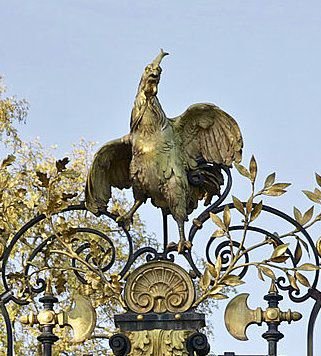
Gallic rooster on the garden gate of the Palais de l'Elysée in Paris
The Greek Doric temple of Athena in Assos (530 BC), with the nearby island of Lesbos at left.
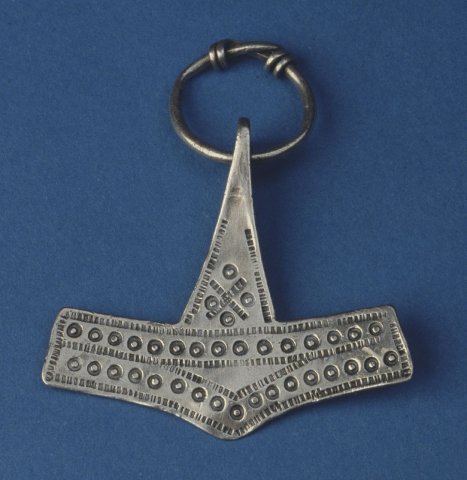
Thor's hammer pendant found at Rømersdal, Denmark. 10th century.
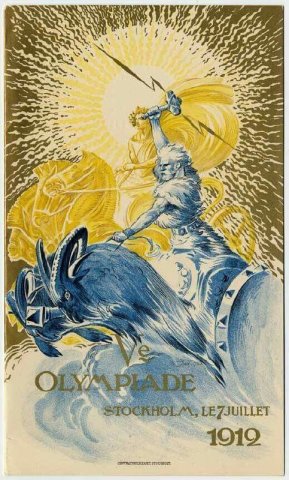
Thor and Sunna
Thor and Sunna
Thor and Sunna
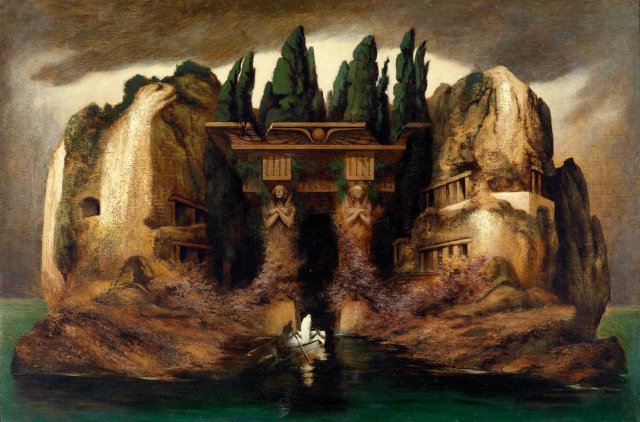
Karl Wilhelm Diefenbach (German, 1851-1913)

Toteninsel (Isle of the Dead)
Karl Wilhelm Diefenbach (German, 1851-1913)Toteninsel (Isle of the Dead)
Karl Wilhelm Diefenbach (German, 1851-1913) Toteninsel (Isle of the Dead)
Medieval Vilnius (Lithuania) by Vilius Petrauskas

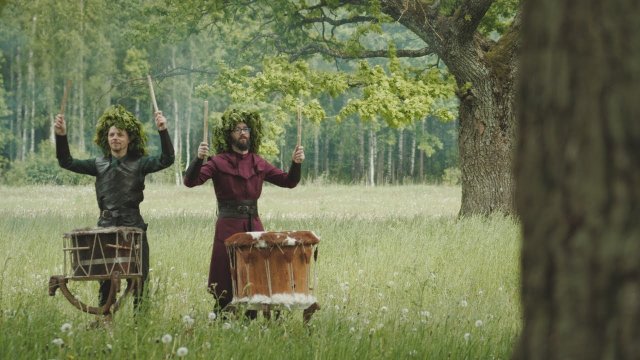
Folk music band **Auļi** and several **folklore groups** wish you a happy celebration of **Midsummer** from **Latvia**!
The title of this piece, __Ozoliņi__, means "Oaks" and the Latvian festival ce
Folk music band **Auļi** and several **folklore groups** wish you a happy celebration of **Midsummer** from **Latvia**!The title of this piece, __Ozoliņi__, means "Oaks" and the Latvian festival celebrating the summer solstice is called __Jāņi__. You can read about it in English on Wikipedia.https://www.youtube.com/watch?v=A2r-uspx6LM
Folk music band **Auļi** and several **folklore groups** wish you a happy celebration of **Midsummer** from **Latvia**! The title of this piece, __Ozoliņi__, means "Oaks" and the Latvian festival celebrating the summer solstice is called __Jāņi__. You can read about it in English on Wikipedia. https://www.youtube.com/watch?v=A2r-uspx6LM
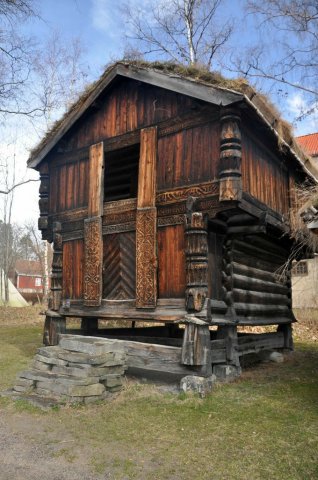
Traditional Norse home moved to the Norse Folkmuseum in Oslo
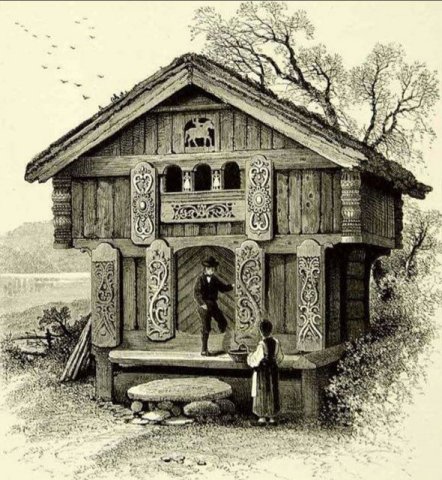
Traditional Norwegian House (1878)
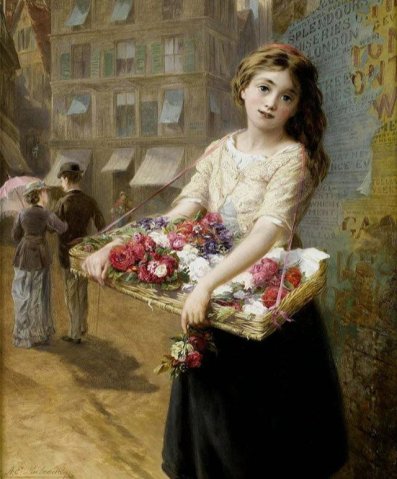
Augustus Edwin Mulready - A street flower seller 1882
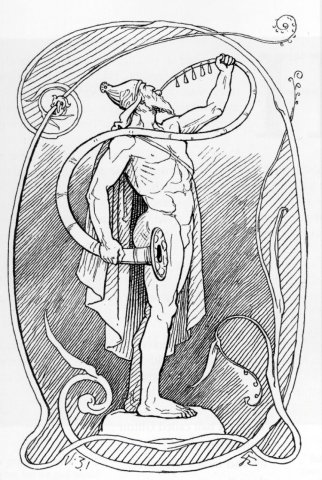
Heimdallr blows Gjallarhorn in an 1895 illustration by Lorenz Frølich.

In Völuspá, the völva foresees the events of Ragnarök and the role in which Heimdallr and Gjallarhorn will play at it
Heimdallr blows Gjallarhorn in an 1895 illustration by Lorenz Frølich.In Völuspá, the völva foresees the events of Ragnarök and the role in which Heimdallr and Gjallarhorn will play at its onset; Heimdallr will raise his horn and blow loudly. "Fast move the sons of Mim, and fate is heard in the note of the Gjallarhorn; Loud blows Heimdall, the horn is aloft, in fear quake all who on Hel-roads are." - Bellows Translation
Heimdallr blows Gjallarhorn in an 1895 illustration by Lorenz Frølich. In Völuspá, the völva foresees the events of Ragnarök and the role in which Heimdallr and Gjallarhorn will play at its onset; Heimdallr will raise his horn and blow loudly. "Fast move the sons of Mim, and fate is heard in the note of the Gjallarhorn; Loud blows Heimdall, the horn is aloft, in fear quake all who on Hel-roads are." - Bellows Translation
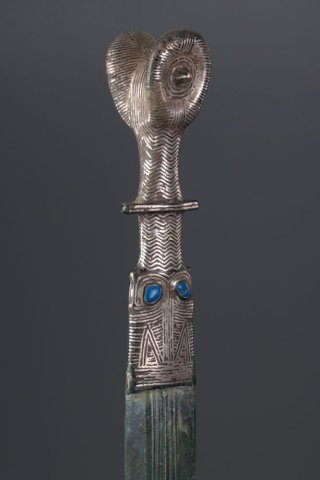
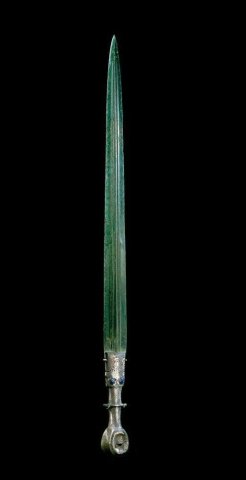
Detail of Celtic Bronze & Lapis Sword, Iberian, c. 6th-3rd Century BCE. Chronologically these weapons are dated to the mid-1st millennium BCE; this beautiful specimen could be still dated to the 6th c
Detail of Celtic Bronze & Lapis Sword, Iberian, c. 6th-3rd Century BCE. Chronologically these weapons are dated to the mid-1st millennium BCE; this beautiful specimen could be still dated to the 6th century BCE, because of the elongated and thin shape that was to be replaced a little later by shorter swords with curved blades called falcatas.
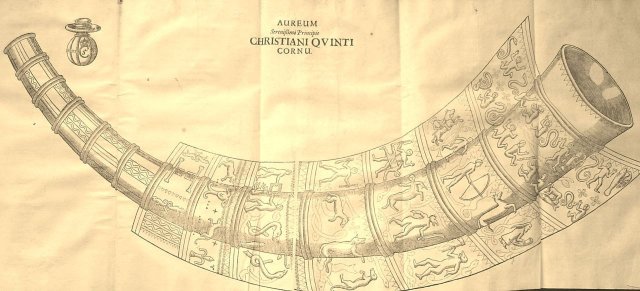
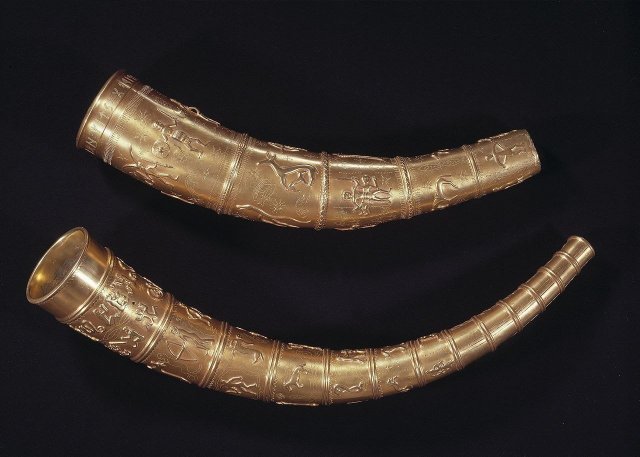
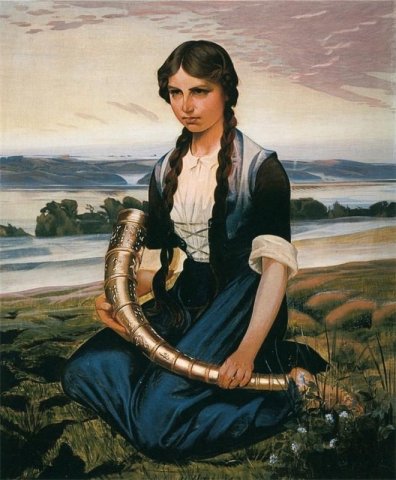
Golden Horns of Gallehus

In 1639 a peasant girl named Kirsten Svendsdatter near Møgeltønder, Denmark discovered a golden horn sticking out of the ground near her home.

Made of gold, the horn was a
Golden Horns of GallehusIn 1639 a peasant girl named Kirsten Svendsdatter near Møgeltønder, Denmark discovered a golden horn sticking out of the ground near her home.Made of gold, the horn was a fifth century artifact with one of the earliest examples of a full sentence written in Elder Futhark.In 1734 another horn was found in the same field as the first. Unfortunately, the original horns were stolen and melted down in 1820, but copies have been made from illustrations.
Golden Horns of Gallehus In 1639 a peasant girl named Kirsten Svendsdatter near Møgeltønder, Denmark discovered a golden horn sticking out of the ground near her home. Made of gold, the horn was a fifth century artifact with one of the earliest examples of a full sentence written in Elder Futhark. In 1734 another horn was found in the same field as the first. Unfortunately, the original horns were stolen and melted down in 1820, but copies have been made from illustrations.
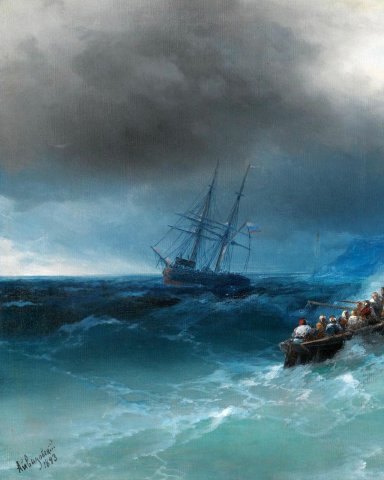
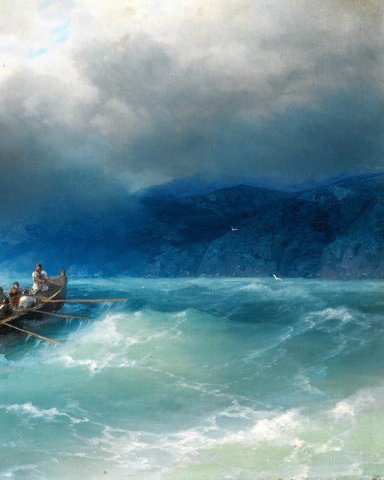
Aivazovsky

Aivazovsky
Aivazovsky
Temple of Athena Nike, Acropolis, Athens
 
Powered by Phoca Gallery